

Fly Ash Silo Project Checklist: 8 Questions to Answer Before You Invest
Fly ash looks like the simplest material a plant can store — until it isn’t. Fine, abrasive, moisture-sensitive and dusty, it punishes storage systems that were sized from a catalogue instead of engineered from the material’s behavior. Before you commit capital to a fly ash silo, eight questions separate a project that runs for decades from one that generates maintenance tickets from month one.
Work through them in order. Each answer constrains the next, and by the end of the list you will know whether a vendor proposal is engineering or just equipment supply.
1. What Are You Storing? Characterize the Material First
Fly ash particles typically range from about 1 to 100 microns, and the mineral sits around Mohs 6–7 in hardness — the same class as quartz. That combination matters twice: the material is fine enough to behave like a fluid when aerated, and hard enough to abrade anything it slides across. Its apparent density and flowability also shift with carbon content and moisture pickup, so the design basis should come from an actual material data sheet or a sample test — not from a generic “powder” assumption.
Every downstream decision in this checklist traces back to this one. A project that cannot produce material characteristics is not ready to buy a silo.
2. Which Silo Construction Type Fits the Duty?
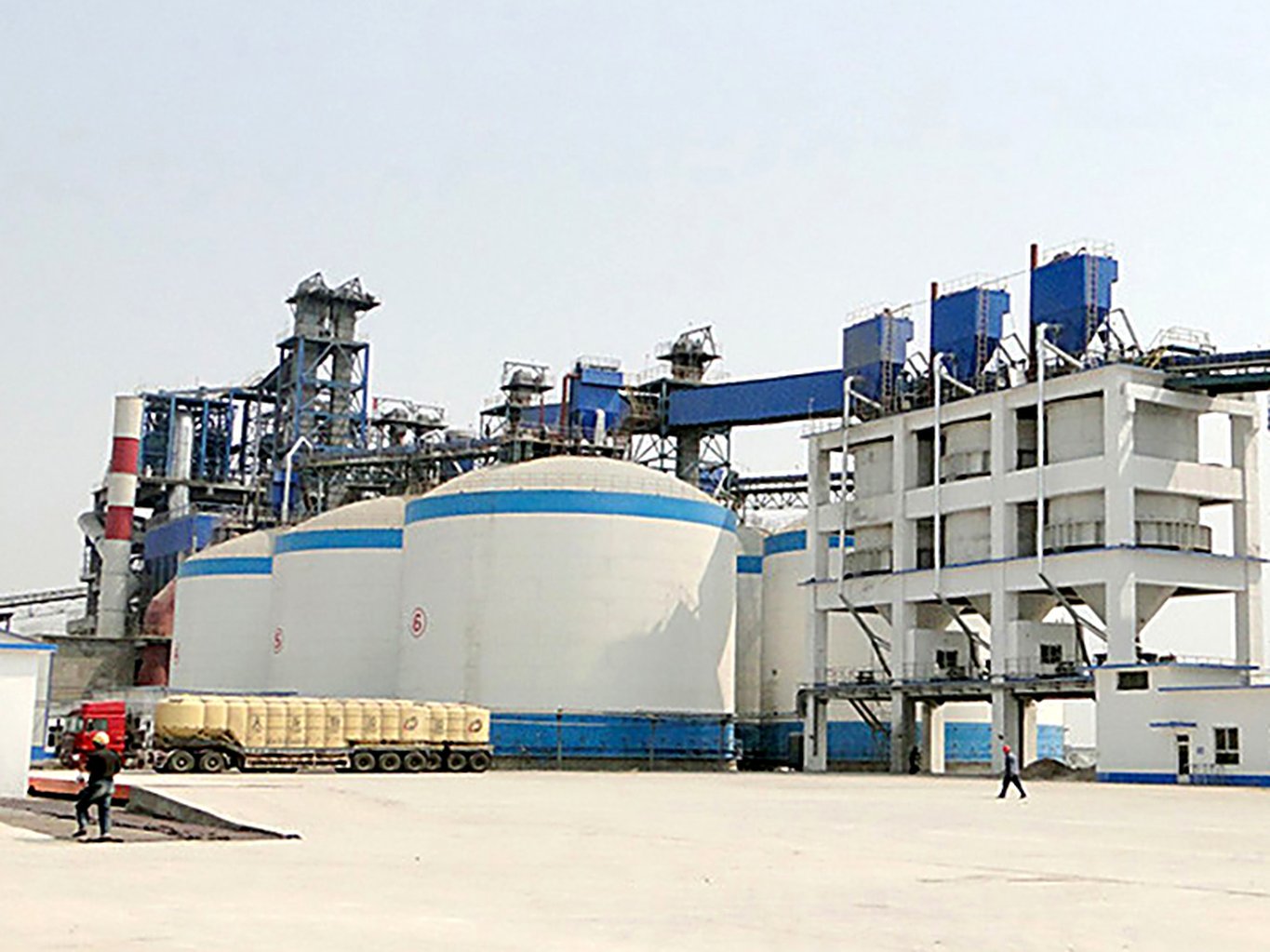
For fine-powder duty the mainstream steel options are the welded silo, the spiral-folded silo and the large bolted silo — each with a proven record in fly ash. What the shortlist excludes is as important as what it includes: corrugated wall construction, the workhorse of grain storage, is not suited to fine powder duty — the corrugations trap and pack product, and the bolted seams of light-gauge panels are not the sealing class this material demands.
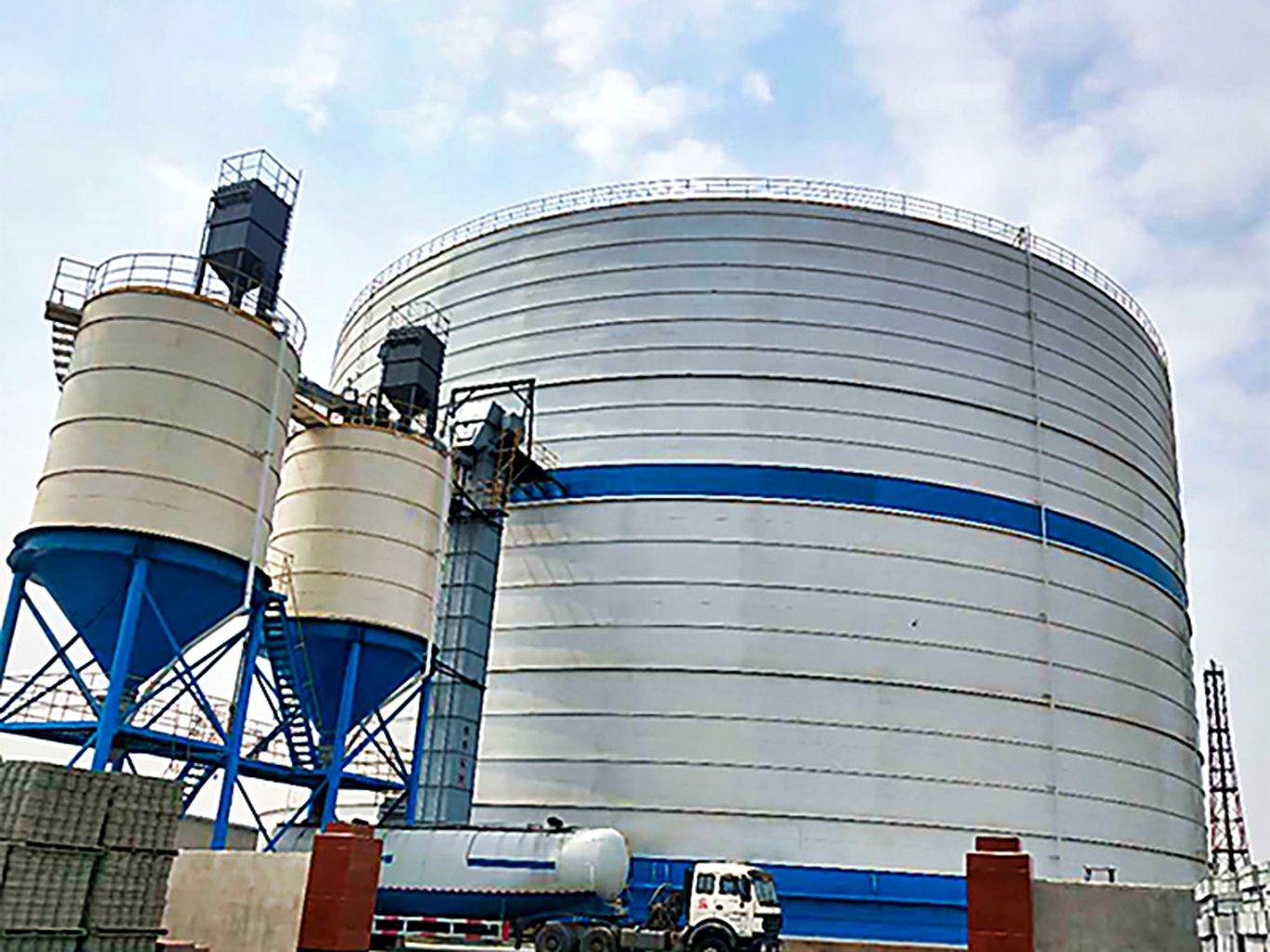
Welded construction leads where large single-silo capacity and the best available sealing are required, with the large welded class covering roughly 8,000–100,000 tons for cement, fly ash and clinker duties. Spiral-folded silos cover the mid-capacity range with fast site erection, and large bolted silos earn their place where future dismantling or relocation is part of the plan. For the full comparison, see our fly ash silo page.
3. How Big Should the Silo Be?
Size the silo from storage mass, not storage volume: nominal capacity equals usable volume multiplied by the material’s bulk density, and fly ash’s density varies enough with source and carbon content that the basis must be stated explicitly. A silo quoted in cubic meters without a density basis will deliver a different number of tons than the brochure implies.
Add the operational margin deliberately: reception surge between deliveries, the drawdown rate your downstream process actually consumes, and the dead capacity that discharge geometry will leave behind (more on that in question 4). Capacity that ignores discharge reality overstates the store by its own margin.
4. How Will It Discharge? Fluidization Is Not Optional
Fine ash de-aerates under its own weight and regains cohesion as it sits — left alone, it stops flowing. The proven answer is fluidized discharge: aeration pads at the cone and along the lower walls, fed by blowers, re-entrain air at the material boundary so it flows reliably to the outlet. Two implementation styles dominate — porous-box aerators and lance-type fluidizing elements — and the choice depends on temperature duty and maintenance preference.
1. Height changes the problem: above roughly 15 meters of storage height, the material column compacts enough that fluidization alone may not break it loose. Tall silos combine steep mass-flow cones with aeration and air cannons so the geometry does the structural work.
2. Design the discharge with the silo, not after it: retrofitting discharge onto a finished shell multiplies transfer points, dust sources and dead zones. The discharge concept belongs in the same drawing package as the shell.
5. How Will You Know the Fill Level?
Use two independent principles. Continuous level measurement — radar or ultrasonic — tracks inventory in real time for logistics and reconciliation. A point-level detector of a different measurement principle, set near the top, provides the independent high-level alarm that stops the filling conveyor before the roof filter is endangered. Two devices of the same principle fail the same way; two of different principles rarely do.
Fly ash adds a complication: dust-laden air above the material surface degrades optical and ultrasonic readings over time. Instruments specified for dusty powder duty, with the mounting positions kept out of the filling stream, hold their accuracy for years instead of months.
6. What About Dust Control and Pressure Relief?
Every ton of pneumatically conveyed fly ash displaces roughly 0.8–1.0 cubic meters of air at the silo roof. The venting bag filter is selected for this peak displacement flow — not average conditions — with air-to-cloth ratios in the 0.8–1.2 m/min class for fine powder duty.
1. Moisture is the filter’s worst enemy: the leading cause of bag failure is not abrasion but moisture — humid air condensing on cold filter surfaces turns the dust cake into cement. Dew-point-managed purge air and insulated or heated filter housings extend bag life from around 6 months to 2 years and beyond.
2. The filter never works alone: the roof filter and the pressure relief valve are a matched pair. A sealed shell with blocked venting can be deformed by over-pressure or vacuum within a single filling cycle. The standard is at least two DN200-class relief valves per silo, set to open around 1.1 times the design pressure.
7. How Do You Protect Against Wear and Corrosion?
Abrasion attacks the discharge path — cones, chutes, screw flights — where ash slides under pressure. The countermeasures are established: hardfaced or replaceable liner segments at sliding surfaces, and steeper geometry where the material must be kept moving. Corrosion is the quieter threat: where sulfur trioxide and chloride are present in the gas stream, the silo top space corrodes aggressively, and protective epoxy-phenolic coating systems on the inner shell give roughly a decade of service at modest cost per square meter.
1. Specify liner material by duty: ceramic lining wins at concentrated impact points; AR-class steel wins across broad sliding surfaces.
2. Inspect on a schedule, not on failure: the wear zones are known at design time — marking them for routine thickness checks turns lining replacement into planned maintenance.
8. Who Carries the Project Risk?
Fugitive dust is a compliance matter, not just a housekeeping one — a single visible emission event can cost a plant somewhere in the range of $10,000–50,000 in penalties in strict jurisdictions, before reputational cost. That is the background against which project structure matters: under an EPC arrangement, one party is responsible from material characterization through design, fabrication, erection, commissioning and performance — one interface, one guarantee, and no gaps between packages where dust problems and schedule disputes live.
A recent retrofit project illustrates the payoff of doing this in the right order: a plant converting its fine-ash storage to a purpose-engineered steel silo system — fluidized discharge, two-stage level measurement and matched dedusting — completed ahead of schedule because the discharge, venting and structure were engineered as one contract instead of three procurements.
Our team delivers fly ash storage on this turnkey basis, with structural design life typically of 30 years or more and one year of free maintenance after commissioning. For scope and service details, see our service page — or send us your material data sheet and daily throughput, and we will come back with a layout proposal and a quotation.
Frequently Asked Questions
Can I use a bolted corrugated grain silo for fly ash?
No — corrugated bolted construction is designed for granular agricultural materials, not fine powders. Corrugations trap and pack fine ash, and the seam sealing class is wrong for a material that fluidizes and finds every leak path. Fly ash duty calls for welded, spiral-folded or large bolted smooth-wall construction.
Why does my fly ash stop flowing after a few weeks of storage?
Fine ash de-aerates under storage pressure and regains cohesive strength — the longer and taller the storage, the more it compacts. The fix is engineered discharge: aeration at the cone and lower walls, steep mass-flow geometry, and air cannons where height exceeds roughly 15 meters.
What kills dust collector bags in fly ash service?
Moisture, not wear. Condensation on filter surfaces turns the dust cake solid. Dew-point control on purge air, insulation or heating of the filter housing, and PTFE-membrane media typically stretch bag life from about 6 months to 2 years.