

Rice Silo Projects: Controlling Temperature and Moisture from Harvest to Mill
Rice is a crop with two personalities. As paddy — the intact grain with its husk — it is among the hardier cereals in storage. Milled, it loses that natural armor and becomes sensitive to heat, moisture and insects. A rice silo project succeeds when it manages the transition between those two states deliberately: temperature and moisture are the controls, and the storage system is the instrument.
This guide walks through the planning decisions for rice and paddy storage — material behavior, sizing, aeration, monitoring and discharge — from the perspective of a project that has to deliver sound grain to the mill, not just hold tonnage.
Why Paddy Behaves Differently from Other Grains
The husk is paddy’s advantage. It shields the grain kernel from mechanical damage and slows moisture exchange with the air, which is why paddy tolerates handling and storage conditions that would injure milled rice. Milling removes that protection — and from that point the rice is vulnerable to insects, odor pickup and quality loss at far milder conditions.
Geometry follows the material. Paddy’s husk and rough surface give it a naturally steep angle of repose — typically in the 37–45° range, steeper than wheat or corn. That affects both silo discharge design and the practical steepness of any hopper: paddy piles steeply, and the design has to respect it.
Safe Moisture: The First Control Point
Long-term storage starts with the right moisture going in. For paddy, the commonly applied safe storage range is around 12–13% (with 12–14% often cited for paddy in general), and storage air with a relative humidity in the roughly 65–75% band keeps the grain in equilibrium rather than gaining or losing water. Grain stored wetter molds and heats; grain dried too far below target loses mass and cracks later in milling.
1. Clean and dry before the silo, not in it: pre-storage cleaning removes fines, broken grain and green material that concentrate moisture and invite insects — the storage system’s aeration is a maintaining tool, not a corrective one.
2. State the basis: as with any grain, nominal capacity in tons equals usable volume multiplied by the material’s bulk density — stated per material, because the same silo holds different tonnage of paddy, milled rice or corn.
Sizing and Silo Selection
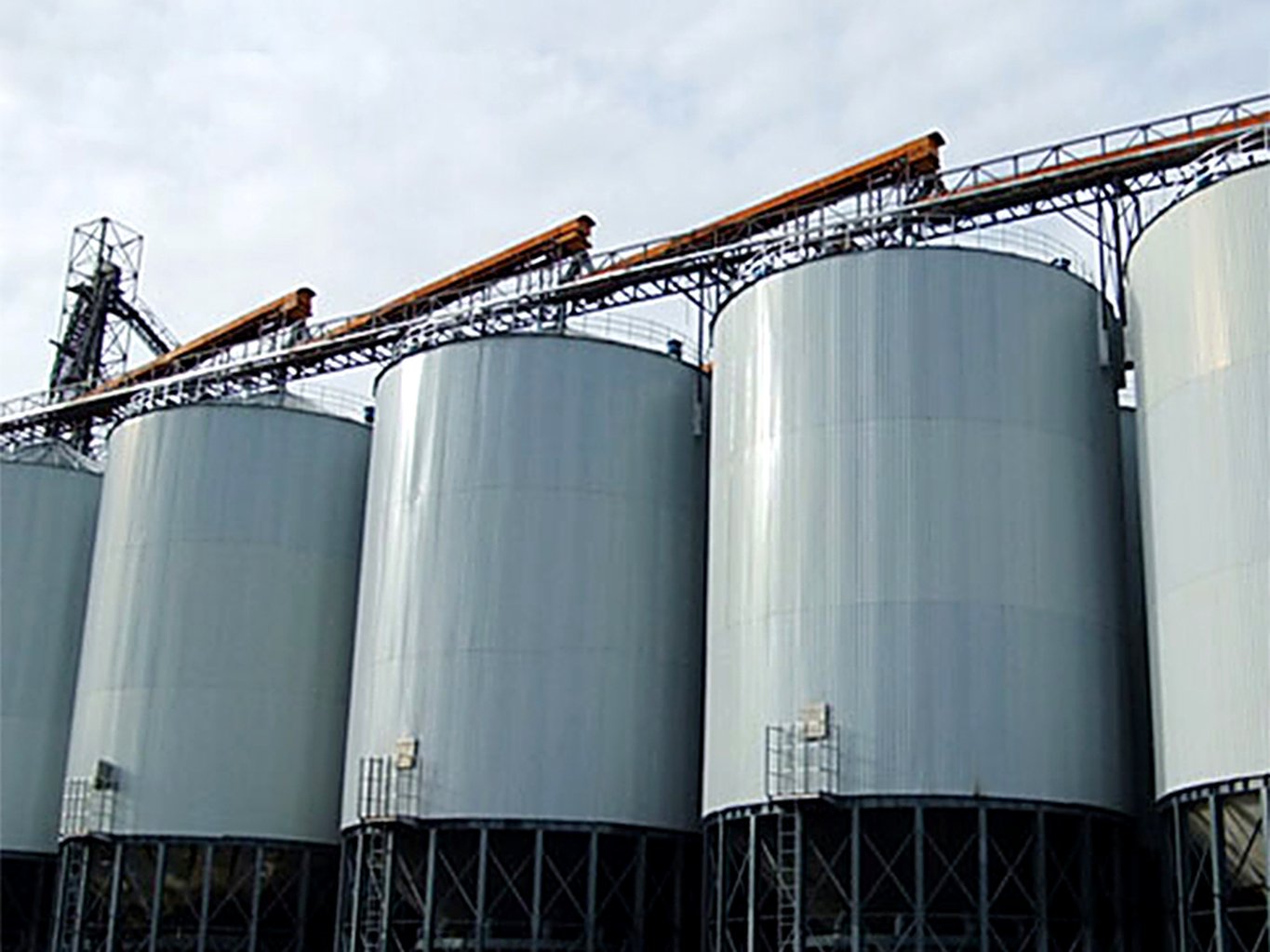
For rice growing and procurement operations, corrugated bolted silos remain the mainstream choice for turnaround storage across small to large capacity ranges, erected quickly and economical per ton stored. Where the operation requires high airtightness — extended storage, fumigation-based insect control — the selection shifts toward constructions with better inherent sealing, a decision best made with the storage duration target in hand rather than assumed.
Sizing follows the same logic as any grain project: work backward from the mill’s consumption and the procurement season’s arrival pattern, add the turnaround margin, and let the storage duration target decide how much sealing and temperature control the design must carry. For configuration options, see our rice silo page.
Aeration: The Main Temperature and Moisture Tool
Aeration is how a rice silo holds grain cool and dry through the storage season. Two duty levels apply, and the fan selection must cover both:
1. Maintenance aeration: a low continuous duty — typically in the range of 0.1–0.2 m³ per minute per ton — that holds a cooling front through the grain mass and equalizes temperature between the core and the wall, preventing the moisture migration that drives spoilage.
2. Active cooling: after harvest intake, when the grain arrives warm, a much higher duty — typically 25–40 m³ per hour per ton — pushes the cooling front through the full grain column within days. Fans for this duty typically work against static pressures in the 800–1,200 Pa range for paddy beds.
The operational discipline matters as much as the hardware: cooling proceeds as a slow front from the bottom of the silo to the top, and the front must be allowed to complete — stopping partway leaves a warm, moisture-carrying zone stranded inside the grain mass. This is the same slow-front logic that governs aeration in corn silo projects, and it is where most storage problems are actually prevented.
Monitoring: Temperature Cables and CO₂ Early Warning
Temperature cables hung through the grain mass give the vertical temperature profile — and the readings matter most where sensors sit close together: a difference of more than about 10°F between adjacent sensors is the signature of an active spoilage hotspot, not just a gradient.
Carbon dioxide monitoring catches trouble earlier than temperature can. Grain respiration and insect activity raise CO₂ above its normal 400–600 ppm background well before a hotspot is warm enough to detect — a sustained rise above roughly 600 ppm calls for a cooling cycle, and levels beyond about 1,200 ppm indicate active deterioration. CO₂ typically leads temperature-based detection by 3–5 days, and paddy — which respires more strongly than milled rice — gives this channel plenty of signal to work with.
Discharge Design for Mill Supply
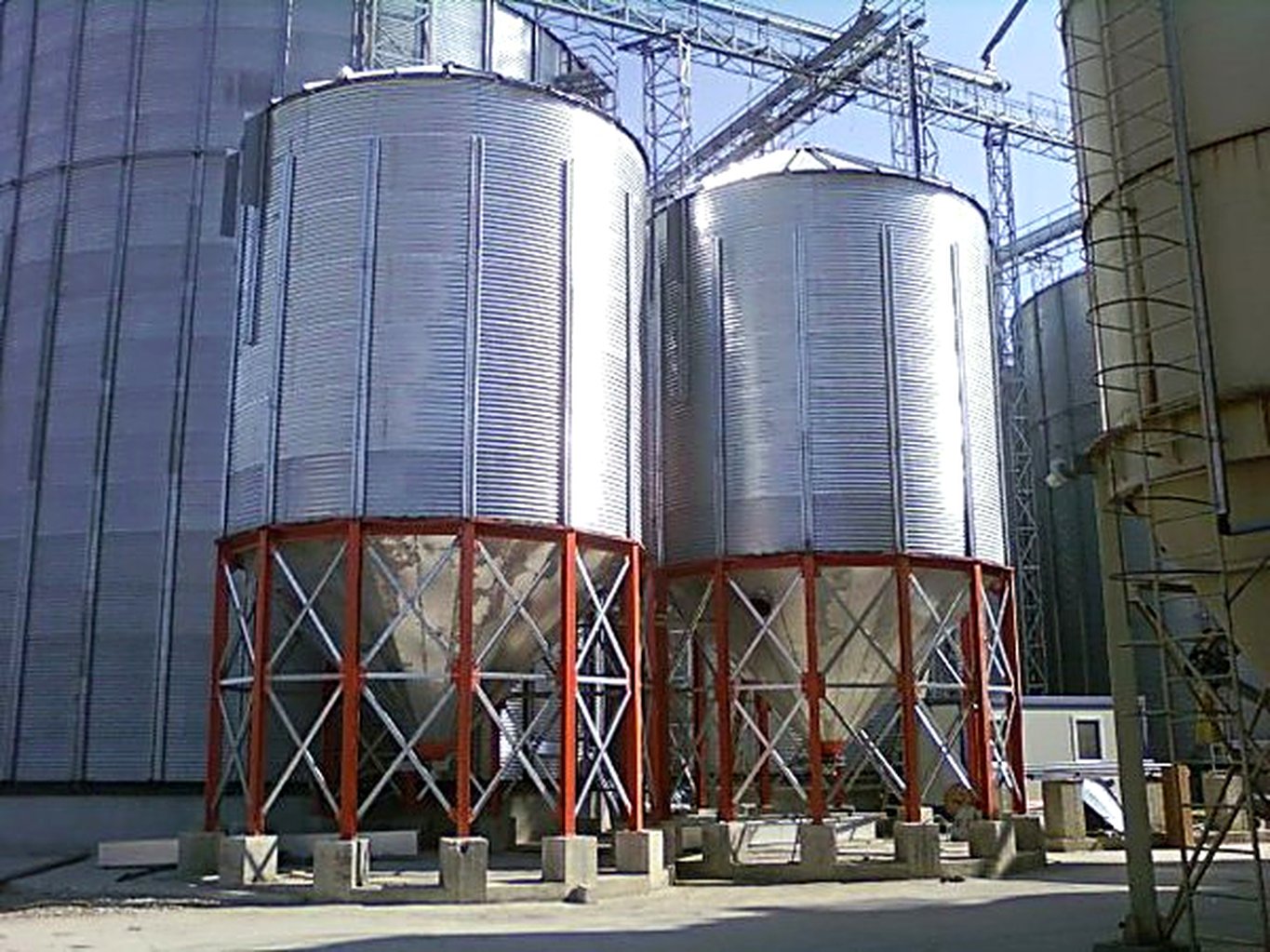
The discharge decision follows the operation’s rhythm. Cone-bottom silos — with hopper angles typically designed in the 40–60° range for paddy — discharge completely by gravity, which suits frequent, first-in-first-out turnover to a mill. Flat-bottom silos store the same tonnage more economically at large diameters and discharge through a sweep auger, with well-designed systems typically emptying 98–99% of contents — the remainder removed at the periodic full cleanout.
The trade is between upfront cost and daily operation: a mill drawing daily should weigh the cone’s complete discharge against its higher structure cost; a seasonal depot holding tonnage for months accepts the sweep-auger residue as part of the economics. Choosing from the actual drawdown schedule — not from the catalogue — is what makes the choice correct.
What a Turnkey Rice Storage Project Includes
A complete rice storage package ties the pieces together: reception and cleaning ahead of the silo, the storage structure sized on a stated density basis, aeration hardware and controls covering both maintenance and cooling duties, temperature cables and CO₂ monitoring tied into one alarm system, and discharge matched to the mill’s drawdown rhythm — with sealing and fumigation readiness designed in where storage duration demands it (fumigation is a system of its own, and worth treating in depth separately). Under an EPC contract, all of it arrives as one scope with one responsible party and one year of free maintenance after commissioning.
If you are planning rice or paddy storage and want temperature and moisture engineered into the project from the start, send us your storage duration target, daily throughput and site conditions — we will come back with a layout proposal and a quotation.
Frequently Asked Questions
What moisture should paddy be stored at?
Around 12–13% is the commonly applied safe long-term range for paddy, in equilibrium with storage air of roughly 65–75% relative humidity. Grain above that range molds and heats; over-dried grain loses sellable mass and cracks during milling.
Should a rice silo be cone-bottom or flat-bottom?
Follow the drawdown rhythm. A mill drawing grain daily benefits from a cone bottom’s complete gravity discharge (typical design angles 40–60° for paddy). Seasonal bulk storage favors flat-bottom silos with sweep augers — typically 98–99% emptying — at lower cost per ton stored.
Does rice storage need refrigerated grain chilling?
Not necessarily. Well-designed aeration with slow-front cooling discipline holds grain temperature in the range where insects and mold stall in most climates. Mechanical chilling is a supplement for tropical conditions or high-value long storage — a decision to make after the aeration economics are on the table.