

Steel Silos vs Flat Warehouses: Grain Depot Modernization
Grain reserve depots built around flat-store warehouses are running into the same wall everywhere: the buildings age, the labor does not get cheaper, and the grain quality margin keeps shrinking. Modernization programs increasingly answer with steel silos — replacing, extending or converting flat storage with vertical steel structures that mechanize the whole storage cycle. This guide explains why the switch pays, and the three routes a depot modernization project can take.
The Hidden Costs of Aging Flat-Store Warehouses
A flat-store warehouse is not a bad building — it is a building matched to a labor era that has ended. Its costs are quiet and cumulative: grain is moved and turned by machine passes and people rather than by gravity and fixed equipment; every surface that contacts grain is a cleaning obligation between lots; aeration is a retrofit compromise rather than a designed airflow path; and fumigation gas holds poorly in a volume that was never engineered to be sealed. Reserve operators feel it as rising cost per stored ton and falling quality assurance per stored month.
Why Steel Silos Fit Reserve Storage Duty
Steel silos bring four structural advantages that map directly onto reserve work:
1. Storage volume at low unit cost, at scale. In the large-capacity class, flat-bottom silos carry a clearly lower cost per stored bushel than small-bin alternatives — above roughly 25,000 bushels per silo, the flat-bottom design wins the unit-economics argument outright.
2. Engineered aeration, fumigation and monitoring as one system. Vertical steel storage is the natural home of the integrated reserve-technology package: mechanical aeration, recirculation fumigation, grain-condition monitoring and grain cooling — specified together as a “four-in-one” system rather than assembled from separate purchases.
3. Sealing that fumigation depends on. Steel silo structures can be engineered to the airtightness levels that phosphine fumigation requires — a discipline nearly impossible to impose on an aging warehouse envelope.
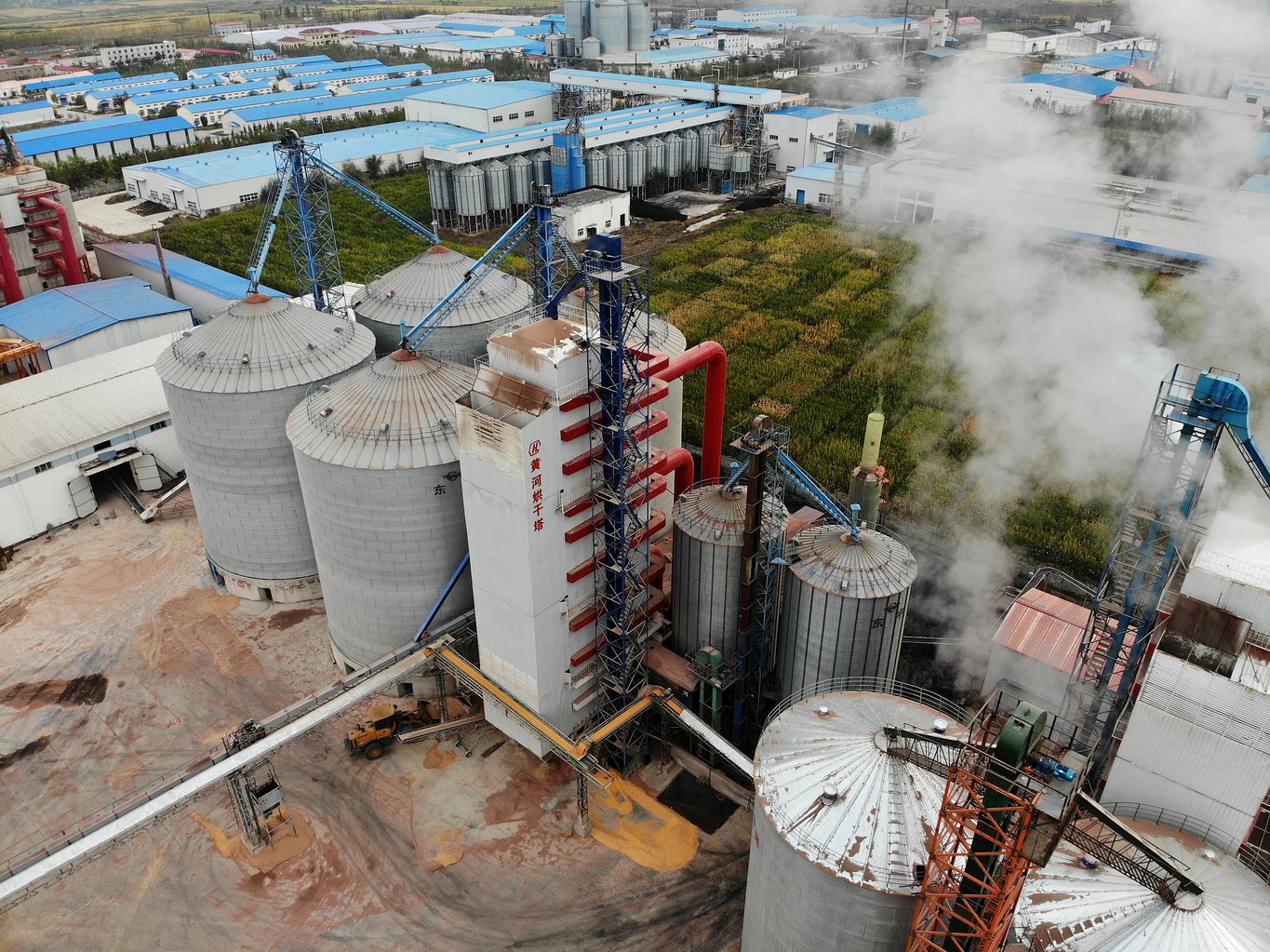
4. Mechanized intake and dispatch. Gravity, conveyors and bucket elevators move grain through the silo cycle without the machine-and-labor choreography of flat storage. The grain silo product range covers this duty class across capacities.
Three Routes to Modernize
Depot projects choose among three structural routes, in rising order of ambition:
1. Raise and extend existing silos. Adding rings to existing steel silos increases capacity without new land — with the non-negotiable condition that the foundation is re-verified for the added load first.
2. Modular silo additions. New silo groups beside existing storage add volume and mechanization incrementally, spreading capital across budget years.
3. Convert flat storage to silo storage. The full modernization: replace warehouse duty with a silo battery and its intake, aeration, monitoring and dispatch systems — the route that changes the depot’s operating cost structure, not just its capacity.
The Modernization Sequence: Aeration First
One discipline orders every successful upgrade: fix the airflow before adding the electronics. Aeration capacity — fans, roof vents and floor or duct paths — is the physical system that keeps grain safe; monitoring cables only report what the airflow failed to prevent. The upgrade that inverts this order buys instruments and keeps the risk.
The complete package closes the loop automatically: moisture cables plus equilibrium-moisture controllers run fans only when outside air actually improves the grain — saving power and preventing the over-drying losses of blind timer schedules. Design airflow rates run typically at 0.1–0.15 m³/min per ton for corn, 0.08–0.12 for wheat and 0.12–0.18 for paddy.
Structural Upgrades That Pay Back
For depots keeping older steel silos in service, three upgrade tiers consistently return their cost:
| Component | Typical upgrade | Why it pays |
|---|---|---|
| Panel coating | Z275 → Z450–600 g/m² zinc class on replacements | Extends panel service life in corrosive or coastal sites |
| Fasteners | Grade 4.8 → 8.8/10.9 bolts at reassembly | Restores design clamping force and fatigue margin |
| Wind rating | 25 → 35+ m/s design wind class on new structures | Meets current code climate loads on replacement silos |
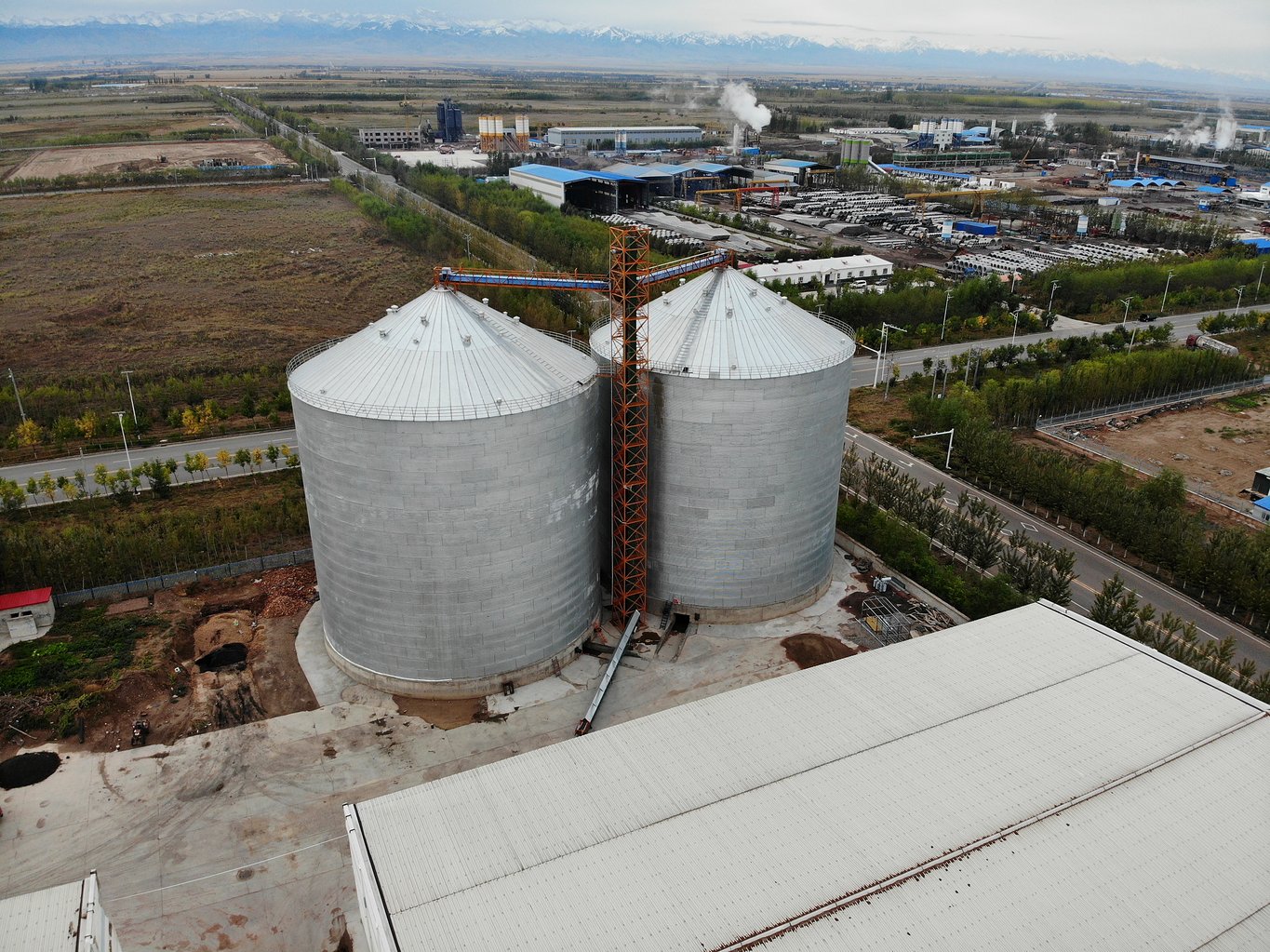
The recurring mistakes are equally consistent: foundations not re-verified before height additions, fans undersized for the actual duct system, and monitoring installed without moisture sensing — the one measurement that lets controllers decide instead of merely alarm. A recent depot modernization project on this pattern — new flat-bottom silo group, integrated four-in-one systems, phased warehouse replacement — shows the standard sequence working at reserve scale.
The Four-in-One System in Practice
What does the integrated package actually do through a storage year? Four duties, four seasons:
1. Mechanical aeration (autumn and winter): fans push outside air through the floor duct system when ambient air is cooler and drier than the grain mass, pulling grain temperature down in steps and breaking up any warm zones before they become hot spots. The airflow rates quoted above — 0.08–0.18 m³/min per ton by grain type — are the design basis; the fan is only half the system, the duct pattern under the floor is the other half.
2. Recirculation fumigation (as required): in a sealed silo, a small fan loop moves phosphine-bearing air through the grain mass continuously, so concentration stays uniform from top to bottom instead of stratifying — which is what lets lower doses achieve complete kill in a structure that holds its gas.
3. Grain-condition monitoring (always): temperature cables at multiple levels and positions feed the controller that decides when aeration is worth running — and, with moisture cables added, when outside air would help or harm. This is the loop that turns the fans from schedule-followers into decision-makers.
4. Grain cooling (summer peaks): where climate demands, a cooling unit pushes chilled, dehumidified air through the same duct system to hold the grain mass below the temperature band where insects and mold accelerate — without freezing it and without the moisture migration that uncontrolled cooling causes.
None of these four subsystems is exotic on its own. The value is in specifying them on one duct system, one control platform and one commissioning plan — which is precisely what an aging flat-store envelope cannot host and a silo battery can.
A Turnkey Upgrade Path
We deliver depot modernization as complete projects: a storage audit of what exists, a capacity and mechanization plan for what replaces it, and execution from foundation to commissioning — custom capacities typically from 500 to 10,000 tons per silo, a 30-year design life philosophy and one year of free maintenance after handover. The first step we recommend is the least glamorous and most valuable: a mechanization and aeration audit of the current depot, before any steel is ordered.
Frequently Asked Questions
Where should a depot modernization start?
With an aeration and mechanization audit of the existing storage. The findings determine which route — extend, add modules, or convert flat storage to silos — returns capital fastest, and they prevent the most common failure: new monitoring electronics installed on top of airflow that was never fixed.
Can a flat-store warehouse be converted directly into silos?
Not literally converted — the silo battery is new construction on the depot site, usually phased so reserve grain stays in rotation. What changes immediately is the operating model: gravity discharge, fixed conveying, engineered aeration and sealed fumigation replace the warehouse’s labor-dependent cycle.
What happens to reserve grain during the works?
Phasing. Projects sequence demolition, foundation works and erection so that active storage is never fully offline — typically by building the first new silo group before retiring the oldest warehouse block.