

Coal Storage Silos: Preventing Spontaneous Combustion
Coal earned its reputation as one of the hardest bulk materials to store. It self-heats, it ignites, its dust explodes, and it does all three quietly — by the time smoke is visible, the fire inside the pile has been developing for days. A coal storage project therefore stands or falls not on the tonnage it holds but on the safety system wrapped around that tonnage: the right structure, early warning, an atmosphere that cannot burn, and dust control that removes the fuel for secondary explosions. This guide walks through those four layers as one engineering package.
Why Coal Is Unforgiving in Storage
The hazard chain is chemical before it is structural. Exposed coal oxidizes slowly at ambient temperature, and oxidation releases heat; if heat accumulates faster than the pile sheds it, temperature climbs through a low-temperature oxidation phase into smoldering, and a smoldering pocket in a confined silo is an ignition source sitting inside a fuel cloud. The cloud part is not an exaggeration: coal dust in air becomes an explosive mixture at remarkably low concentrations — of the order of a kilogram and a half of fine coal dust suspended in the headspace air of a modest room-sized volume. Lower-rank coals, notably sub-bituminous grades, self-heat most readily and deserve the strictest package. The same confinement logic protects the material’s neighbors, from cement plants co-storing alternative fuels to power stations lining up weeks of boiler feed.
Silo Selection: Structure as the First Safety Layer
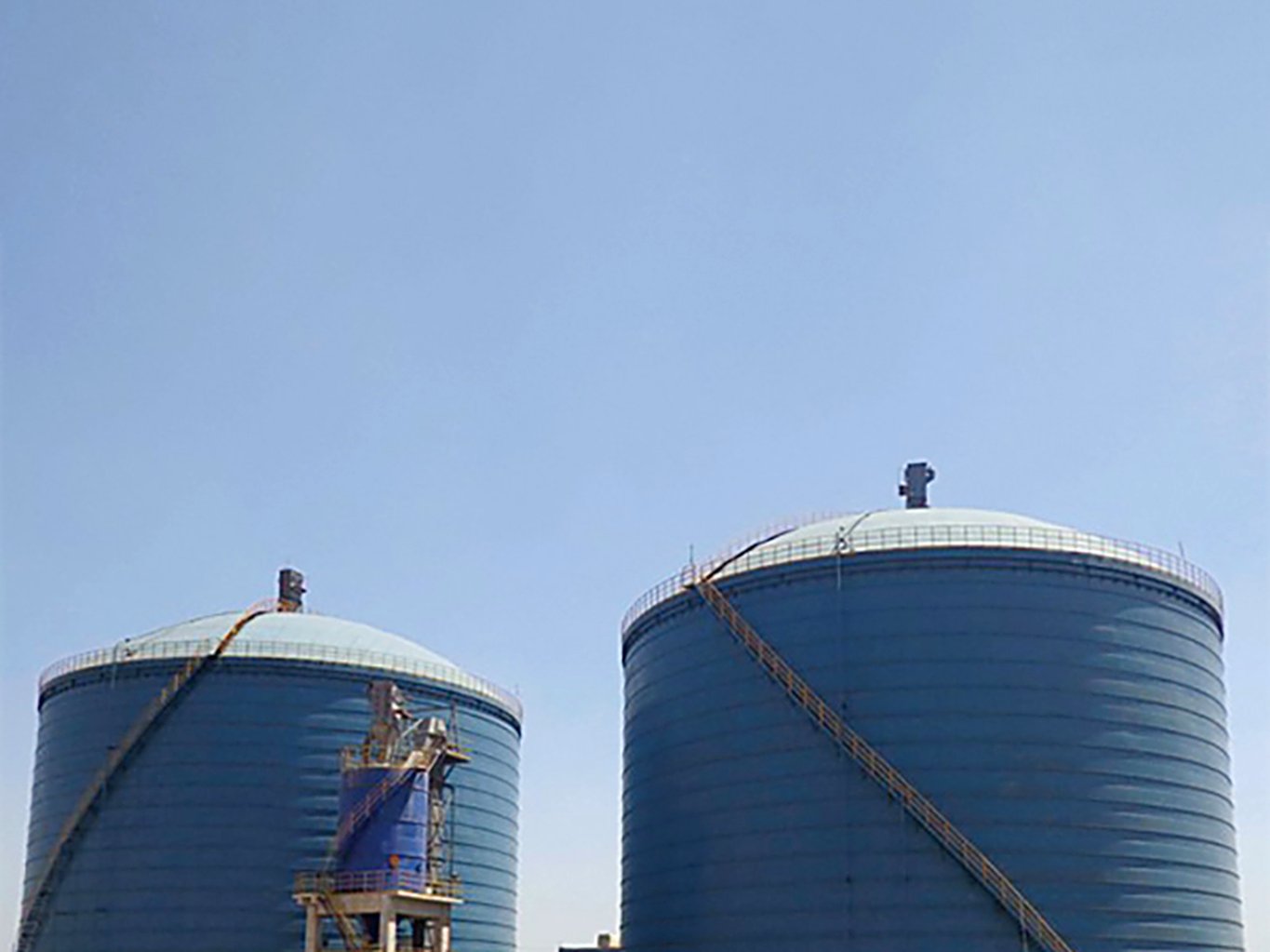
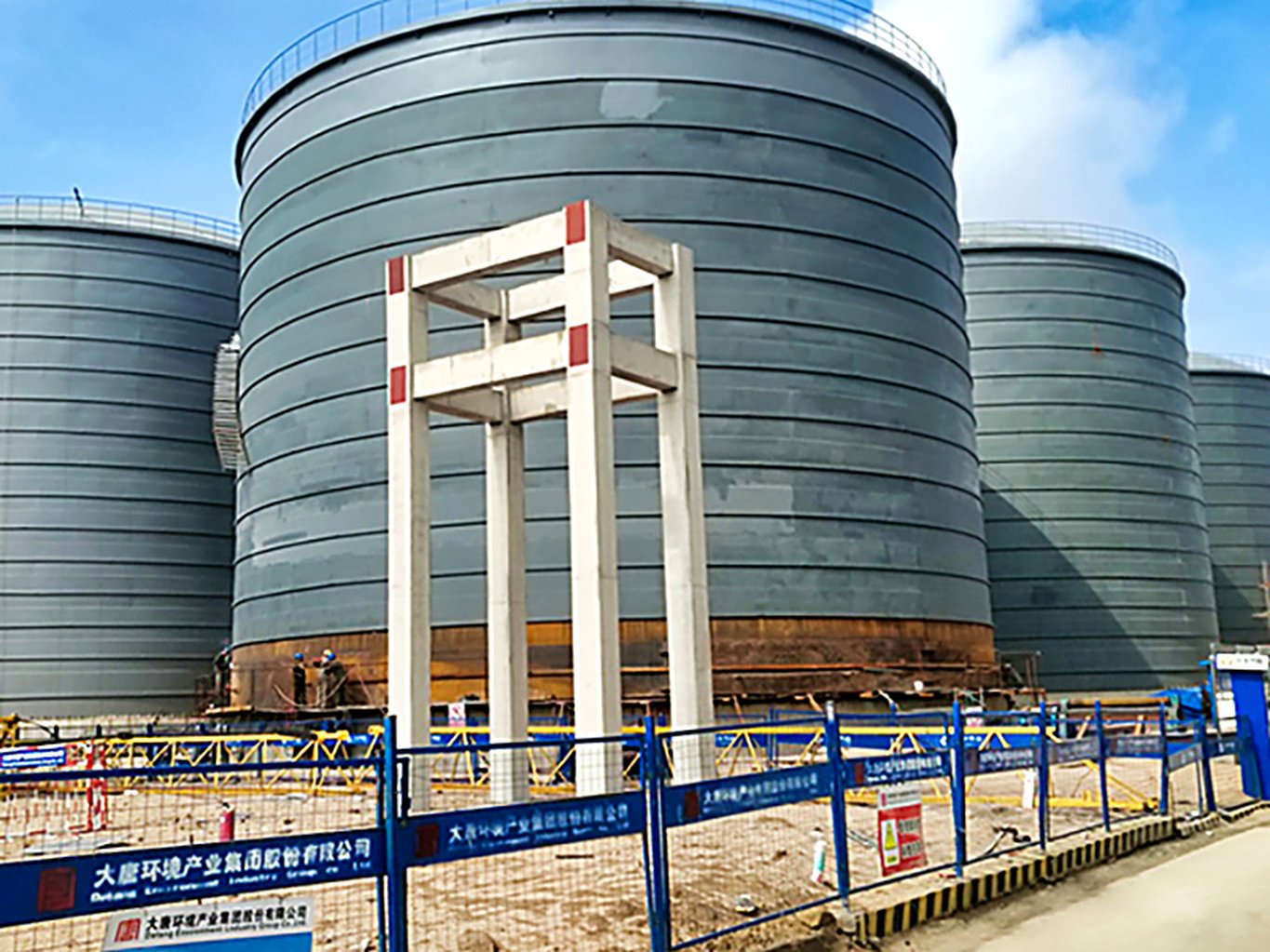
Structure choice is the first safety decision, not a cost decision. The reference solution for large enclosed coal storage is a fully enclosed large-volume structure without internal supports — the feature that matters most is what it does not have: no trusses, no braces, no horizontal ledges inside the volume. Internal steelwork in a coal enclosure collects dust, and dust collected above a coal pile is the classic fuel bed for a secondary explosion; a clean internal profile removes that geometry entirely. Enclosure also solves the water side of the equation: a sealed roof and insulated shell keep rain and condensation out, and dry coal self-heats slower than damp coal. A recent large enclosed coal storage project on this pattern — six enclosed storage units in the 60,000-ton class — demonstrates the configuration at reserve scale, and the same enclosure logic scales down through the industrial powder storage silo class for plant-day duties.
Preventing Spontaneous Combustion
Prevention works by breaking the chain at its links, in order:
1. Watch CO, not just temperature. Carbon monoxide is the earliest reliable signal of coal oxidation — in documented episodes, headspace CO climbed from around 20 ppm toward 250 ppm within roughly twenty minutes of oxidation starting while the material temperature had barely moved. CO instrumentation detects what thermometry cannot, early. Temperature cables remain essential for the pile profile; sensors at multiple levels, duplicated at each point and cross-checked against each other, separate real warming from sensor drift.
2. Deny the fire oxygen. Inerting with nitrogen or carbon dioxide displaces the oxygen that both smoldering and dust explosions require, applied to the headspace when monitoring signals rise and held until the anomaly clears. Fully enclosed designs take inerting further: sealed top and bottom, with controlled atmosphere maintenance, starve the process before it starts.
3. Keep the coal dry and the building sealed.
Condensation is quiet sabotage — damp coal self-heats faster, so the insulation and membrane package that keeps the shell dry is safety equipment, not building finish. And the first physical line of defense is humble: the seals on bottom doors and access openings. One documented underground storage fire burned for months because a maintenance-door leak let air feed the pile; after the bottom seals were rebuilt, the same facility never repeated the event. Bottom penetrations are where an inerted silo leaks its safety away.
4. If ignition occurs: inert, never flood. Water struggles to reach a deep-seated fire and the steam it generates can fluidize dust; re-ignition after apparent extinguishment is common enough that the accepted practice is inerting followed by controlled, complete discharge of the affected volume spread for cooling — monitor, inert, empty, verify.
Monitoring Beyond CO
The modern monitoring stack layers independent senses: CO for chemistry, multi-level temperature cables for the pile, infrared thermal scanning of incoming material on the conveyor — catching hot coal before it ever enters storage — and linear heat-sensing cable along equipment, which routinely detects a belt or bearing fire before the thermal scanner sees it, and trips the feed automatically. The monitoring layer earns its cost the day it converts an invisible smolder into a data trend with a month of margin.
Dust Control Done Right
Dust control in coal storage is explosion prevention wearing a different name. The preference hierarchy is short: wet scrubbers first for enclosed coal duties — captured dust leaves the air as a wet, non-combustible slurry rather than a collected dry fuel — with dry bag filtration acceptable only where it is engineered and maintained to explosive-dust standards, because a hopper full of dry coal dust is a concentrated fuel reserve waiting for one spark. Transfer points deserve the same discipline as the silo: enclosed chutes, suppressed discharge, and extraction at every point where the material stream opens to air.
What a Turnkey Coal Storage Project Includes
We deliver coal storage as an integrated project: structure selection and capacity engineering, the monitoring stack, inerting provision, sealed discharge design and dust control — scoped, installed and commissioned as one system with single-point responsibility, custom capacities typically from 500 to 10,000 tons per unit, a 30-year design life philosophy and one year of free maintenance after handover. Bring us your coal analysis, throughput and storage duration, and our team will propose the safety package the material actually demands.
Frequently Asked Questions
At what CO level should a coal silo alarm?
Alarming is about trend, not a single magic number: a sustained rise from the baseline — from the tens of ppm toward the hundreds — marks active oxidation while the coal is still far from ignition. Set alert thresholds on rate-of-change as well as absolute level, and let the response ladder escalate from verification through inerting to controlled discharge.
Wet scrubber or bag filter for coal dust?
For enclosed coal duties, wet scrubbing is the safer default — it removes dust from the air as a non-combustible slurry, while a dry bag collector concentrates fine coal dust in its hopper and must therefore be engineered to full explosive-dust standards to be acceptable at all.
How do we lower the risk in an older coal silo?
In order of return: seal the bottom doors and penetrations, add or repair condensation control on the shell, install headspace CO monitoring, and review the internal structure for dust-collecting surfaces. The oldest enclosures usually leak safety through the bottom long before they lack technology at the top.
How long can coal safely stay in storage?
It depends on the coal and the package, in that order. Low-rank, self-heating coals carry the shortest safe residence and the strictest monitoring requirement; a sealed, inerted, monitored enclosure extends safe residence for every grade. The working rule: storage duration is a decision the monitoring system makes continuously, not a number fixed at intake — plan turnover around the coal’s rank, and let CO trends confirm the plan is holding.
What should commissioning of a coal silo include?
A real cold-commissioning test, not a handover signature: verify CO and temperature sensor agreement across the silo, prove the inerting system’s delivery rate and reach, exercise the discharge equipment under load, and confirm that monitoring alarms actually stop the feed conveyor. Every safety layer that has not been demonstrated under controlled conditions is a layer that will first be tested during the incident it was bought to prevent.