

Feed Mill and Poultry Farm Silo Projects: From 100T Bins to Integrated Storage
Feed is the most valuable grain on the farm by the time it is feed. A ton of pellets carries the cost of the grain, the milling, the conditioning and the fat or molten additive sprayed onto it — and every percentage point of breakage or mold in storage takes that value straight off the margin. Feed mill and poultry farm storage therefore follows different rules from commodity grain storage: smaller structures, faster turnover, gentler handling and a delivery rhythm that never stops.
This guide walks through storage projects from the farm bin to the integrated feed mill, and the design points that keep feed flowing intact.
Why Feed Storage Has Its Own Rules
Three properties set feed apart. First, pellets are fragile: every drop, auger transfer and free-fall into a silo breaks pellets into fines, and fines are downgraded product — feed mills pay for pellets and sell dust at a discount, or worse, pay to have it removed. Second, feed often carries fat and other additives that make it both attractive to pests and prone to flow problems in humid weather. Third, consumption is continuous: a poultry house draws feed every day, on schedule, which makes storage availability a production issue, not a logistics detail.
Storage design answers all three with the same triangle: gentle handling, dry and cool grain, and structures sized to the delivery rhythm.
Farm-Level Bins: The 100-Ton Class
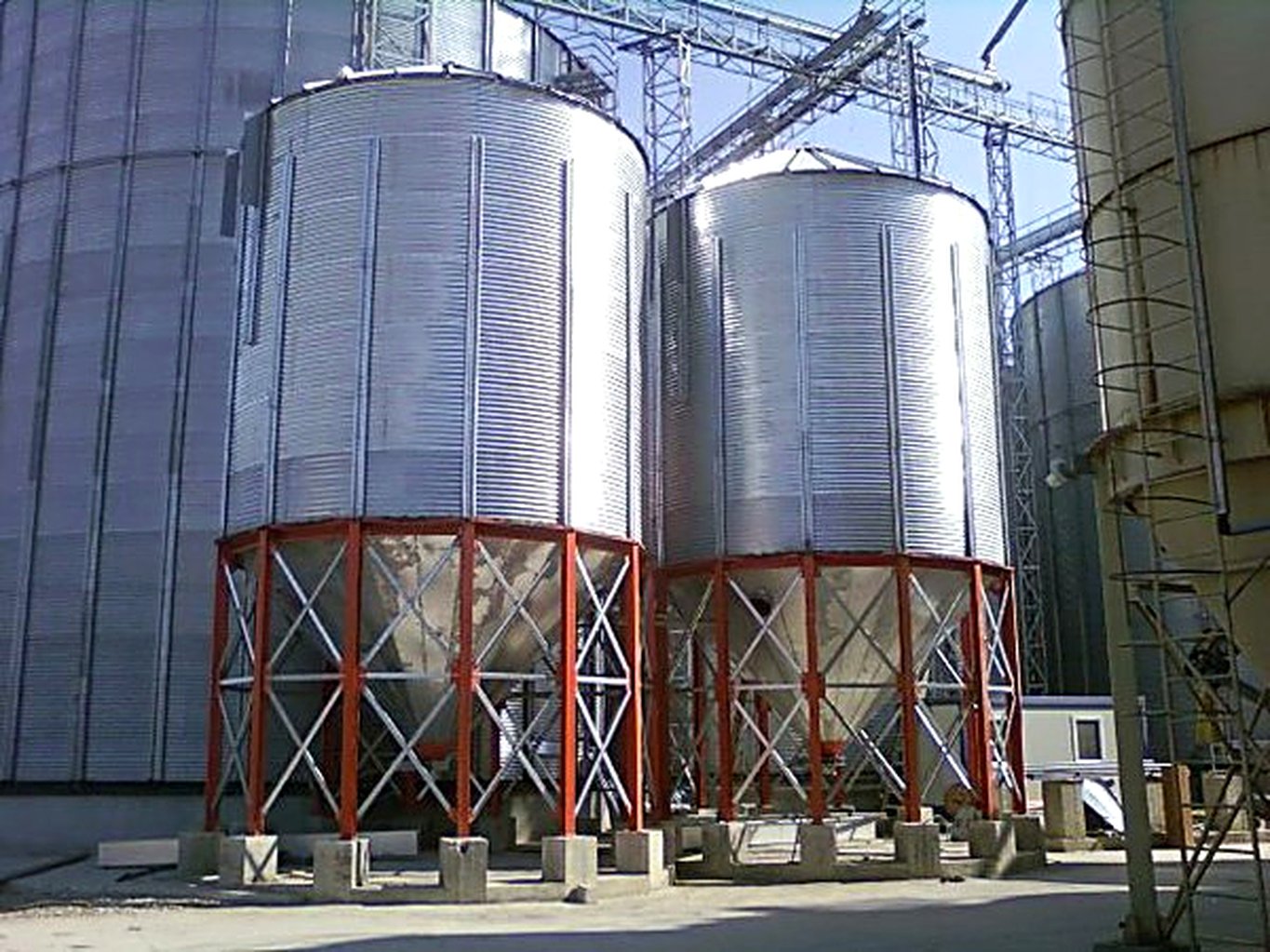
At the poultry farm, storage starts small. Steel farm bins in the 20–10,000 ton range cover the whole spread of farm duties, and the 100-ton class is the workhorse: a hopper-bottom silo on steel legs, filling from the delivery truck and discharging by gravity into the house feed line. At this scale the design questions are refreshingly simple — hopper angle steep enough for the pellet blend to flow, a slide valve or feeder the house system can call, and a lid that seals against weather and birds.
Because a farm bin empties and refills every few days, it works mostly full and mostly moving — the easiest duty in grain storage, provided the unloading system keeps pace with the feed line’s daily demand.
Feed Mill Buffer and Bulk Storage
At the feed mill, storage splits into two distinct duties:
1. Buffer bins at the process: hoppers above mixers and press lines hold hours, not weeks. These are hopper-bottom silos by definition — complete gravity discharge and first-in-first-out turnover is exactly what a buffer is for, and it is the same logic that makes cone-bottom silos the standard for seed grain and high-turnover storage everywhere.
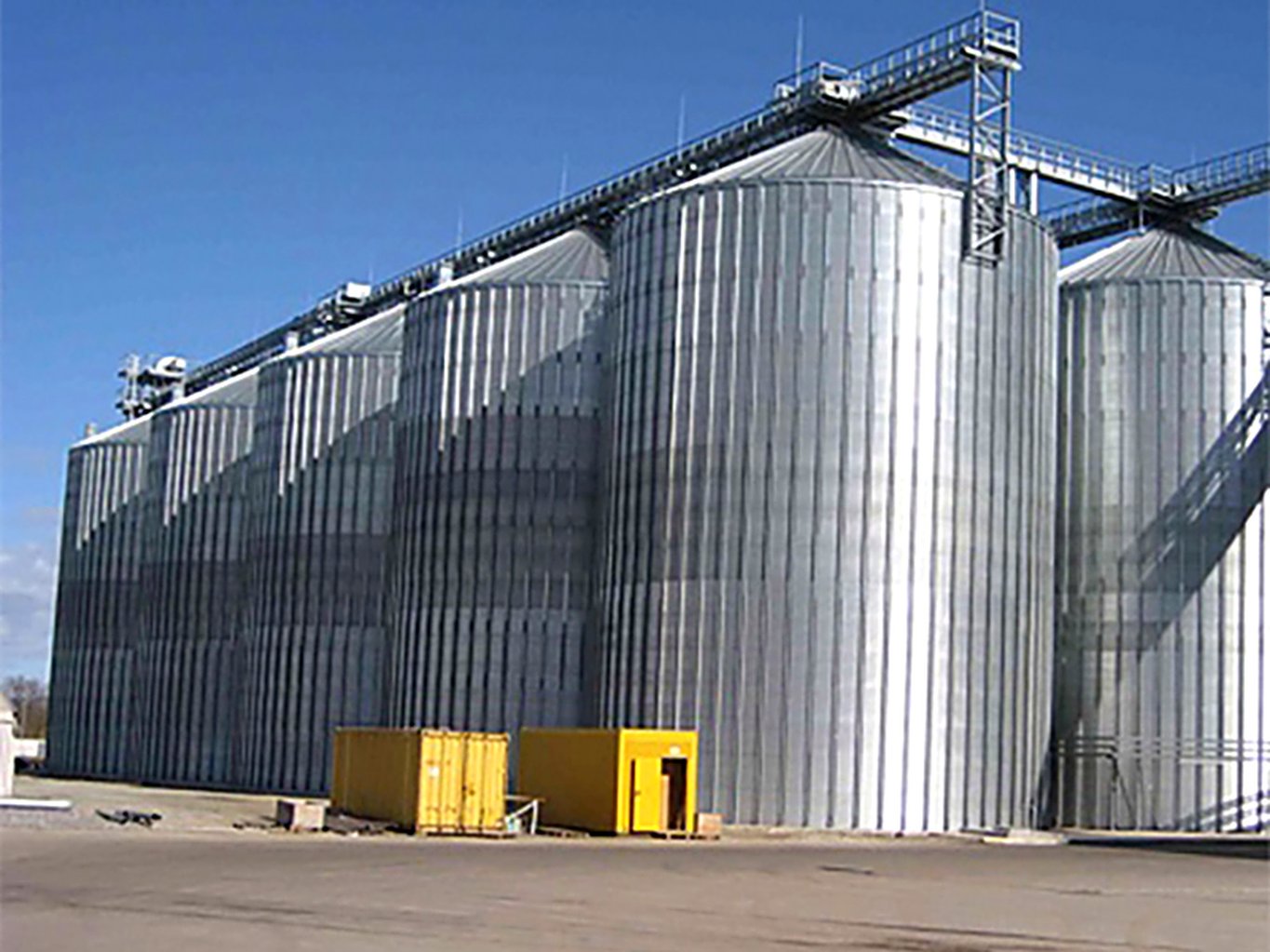
2. Bulk silos for raw grain intake: incoming corn, wheat and soybean meal arrive by the truckload and need days-to-weeks of storage ahead of the mill. This is turnaround duty, and corrugated bolted silos remain the mainstream choice — erected quickly, economical per ton stored, and sized from the mill’s consumption and delivery pattern.
Pellet storage has one more discipline of its own: breakage control. A recent feed pellet storage project shows the pattern — transfer points lined with wear-resistant sliding plates and in-silo anti-breakage fittings that let the pellet column slide down the wall instead of free-falling, cutting fines generation sharply without slowing the loadout. None of it is exotic hardware; all of it has to be planned before the silo is built, because breakage is designed out, not fixed afterward. For feed-duty silo options, see our feed silo page.
From Single Bins to Integrated Systems
A working feed operation rarely stops at storage. Reception pits receive truck deliveries; bucket elevators and chain or drag conveyors lift and move grain between intake, cleaning, the mill and the silos; and the dispatch side loads bulk trucks for the farms. When these pieces come from separate procurements, the seams show — mismatched capacities leave elevators idling or silos starving, and every improvised transfer point adds breakage and dust.
An integrated project sizes the chain as one system: the mill’s hourly consumption defines the buffer bins, the silo group absorbs delivery batches, and conveying capacity matches the peak, not the average. One layout also means one control system, which is what makes automated receiving and dispatch possible at all.
Keeping Feed Dry, Cool and Flowing
Moisture discipline in feed storage starts before the silo. Grain going into mill storage is kept at or below its safe summer storage level — around 13% for corn and wheat by commonly applied guidelines — and pellets leave the press cooled and dried to the specification their blend requires. Inside the silo, aeration keeps the grain mass cool and evens out temperature between core and wall, which is what prevents the moisture migration that molds feed from the inside. Temperature cables add the early warning: a hotspot caught in its first days is a ventilation decision, while a hotspot caught late is a salvage operation. For silo classes and capacity options across grain duties, see our grain silo for sale page.
What an Integrated Feed Storage Project Includes
A complete feed-sector package runs from the truck pit to the farm delivery: reception and cleaning, elevators and conveyors sized to the mill, the buffer and bulk silo group with breakage-protected pellet handling, aeration and monitoring, and bulk loadout for farm delivery — all under one EPC scope with one responsible party and one year of free maintenance after commissioning.
If you are planning storage for a feed mill or a poultry operation — from a bank of farm bins to a fully integrated mill project — send us your daily consumption and delivery pattern, and we will come back with a layout proposal and a quotation.
Frequently Asked Questions
How big should a poultry farm storage bin be?
Size it against the feed delivery rhythm: a bin that holds roughly a delivery plus a safety margin lets trucks run on schedule even when a delivery slips. For most poultry operations that lands in the 100-ton class, which is why hopper-bottom farm bins around that size are the standard starting point.
Should feed storage be hopper-bottom or flat-bottom?
Follow the turnover. Buffer bins and farm bins that empty every few days belong on hoppers — complete gravity discharge, first-in-first-out. Large seasonal stores of raw grain favor flat-bottom silos at lower cost per ton, emptied through sweep augers. Feed pellets, being fragile and high-value, should always sit in gentle, complete-discharge structures.
How do you prevent pellet breakage in a silo?
Design the pellet path before the silo is built: lined sliding surfaces at transfer points, anti-breakage fittings that let the column slide down the wall instead of dropping, conveyors matched to the loadout rate, and no improvised free-fall transfers. Breakage is a design outcome — retrofitting gentleness onto a hard-handling system never fully works.