

Wheat Silo Planning Guide: Capacity Calculation, Cleaning and Fumigation Systems
A wheat storage project succeeds or fails at the planning stage. The three systems that decide long-term performance — sizing, cleaning and sealing — are all cheap to design correctly and expensive to retrofit. This guide walks through the planning sequence for a wheat silo project: how to calculate the capacity you actually need, how to prepare the grain before it enters the store, and how to build the airtightness that fumigation and quality protection both depend on.
Start with the Grain: Wheat Storage Fundamentals
Every sizing decision starts with the material itself. Wheat has a bulk density of roughly 0.75 t/m³, an angle of repose typically between 23° and 38°, and a safe storage moisture of around 13% for long-term, warm-season duty. None of these numbers is exotic — but each one drives a design choice, and skipping them is how projects end up with silos that hold less than their nameplate, cones that stall, or grain that spoils in the core of the store.
The angle of repose deserves a specific note: it determines how much of a flat-bottom silo’s volume is usable grain versus the natural cone that forms under the filling point, and it sets the minimum slope a hopper needs before wheat will flow reliably to the outlet.
Sizing the Silo: Capacity Calculation Step by Step
1. Convert tonnage to volume: divide the target tonnage by wheat’s bulk density. A 10,000-ton store needs roughly 13,300 cubic meters of grain volume — and this figure is based on material bulk density, which is exactly why the same silo holds a different nominal tonnage of wheat, corn or cement. Reputable capacity ratings always state the reference material.
2. Add the allowances: the geometric volume must exceed the live tonnage — allowances for the filling cone at the angle of repose, clearance under the roof, and the dead grain that always remains against the floor in flat-bottom stores. A well-sized silo states its live capacity, not just its volume.
3. Choose the construction type: for grain duty, galvanized corrugated bolted silos are the mainstream choice, covering roughly 15–15,000 tons per silo on the wheat basis — a range that takes in everything from farm bins to commercial depot cells. Where long-term sealed storage or low-temperature programs are planned, insulated or welded constructions enter the comparison at higher cost.
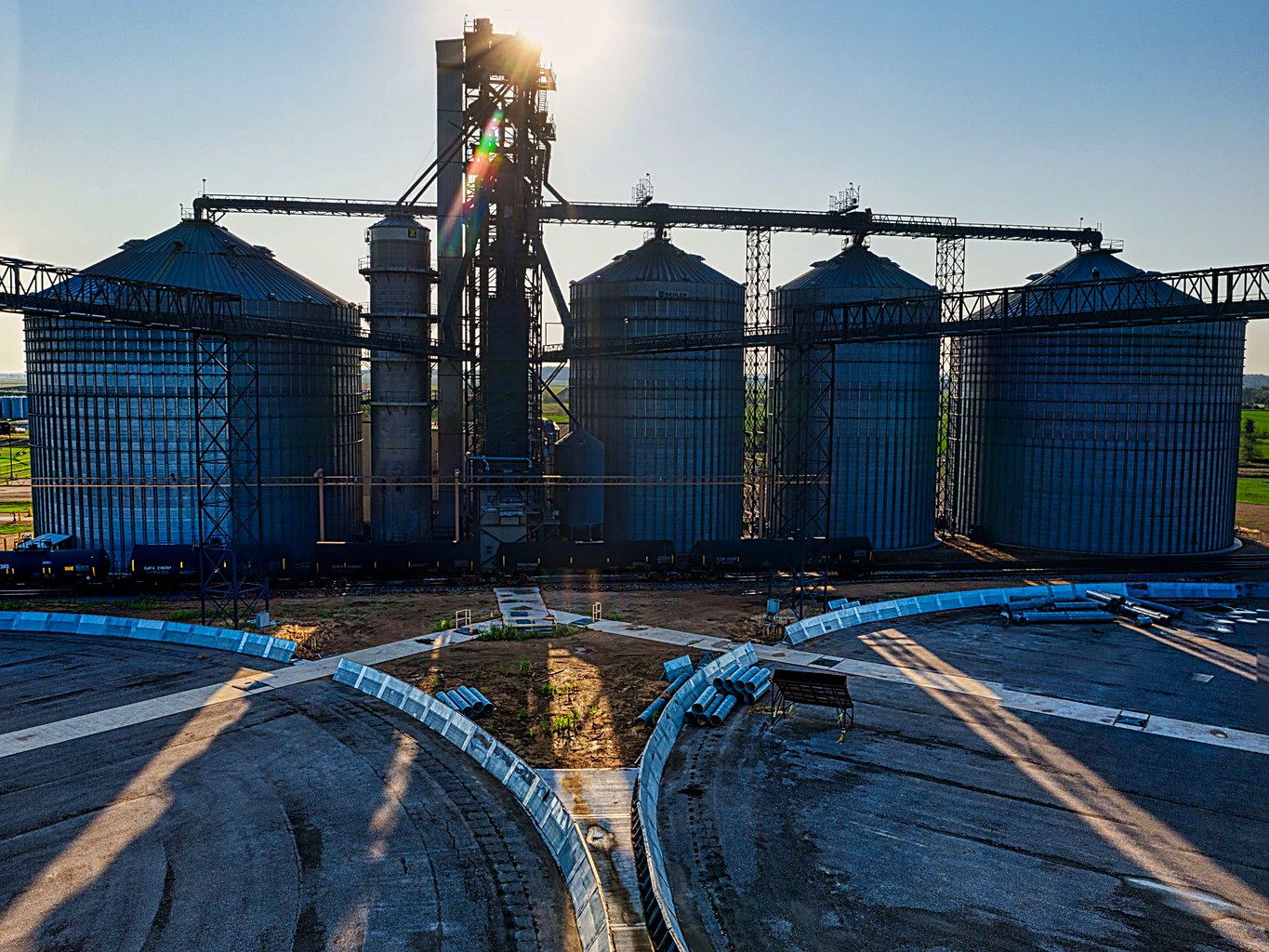
4. Set the diameter and height: height in the 25–35 m band is the usual economic compromise between land use and foundation cost — and the foundation side of that trade is steep, because every additional increment of height raises foundation cost disproportionately. Diameter, meanwhile, interacts with the aeration and discharge systems: a wider floor gives the cleaning, aeration and sweep equipment more room to work.
Design Loads: Moisture Changes Everything
Wheat is usually treated as a constant material, and that assumption breaks in humid climates. Silo wall pressure depends on the grain’s bulk density and friction behavior — and both shift with moisture. Field data shows that a moisture increase of just half a percentage point, the kind a monsoon season produces routinely, raises lateral wall pressure by 3–5% — enough to eat a significant bite out of the design safety margin if it was never considered.
Two structural points follow for the specification. First, moisture should be treated as a load variable, not a fixed property — the silo specified for your wettest realistic grain, not your average grain. Second, in tall stores the accumulated friction between the grain column and the wall becomes a governing load in its own right; above roughly 30 m of height, this vertical friction load exceeds the hopper pressures that dominate most textbook designs. These are exactly the parameters a silo supplier’s structural engineer should be showing you, not hiding inside a standard drawing. For construction options across the grain duty range, see our wheat silo page.
Cleaning Systems Before Storage
Clean grain stores well; dirty grain stores badly and costs more to protect. The cleaning chain starts at intake and finishes in the silo.
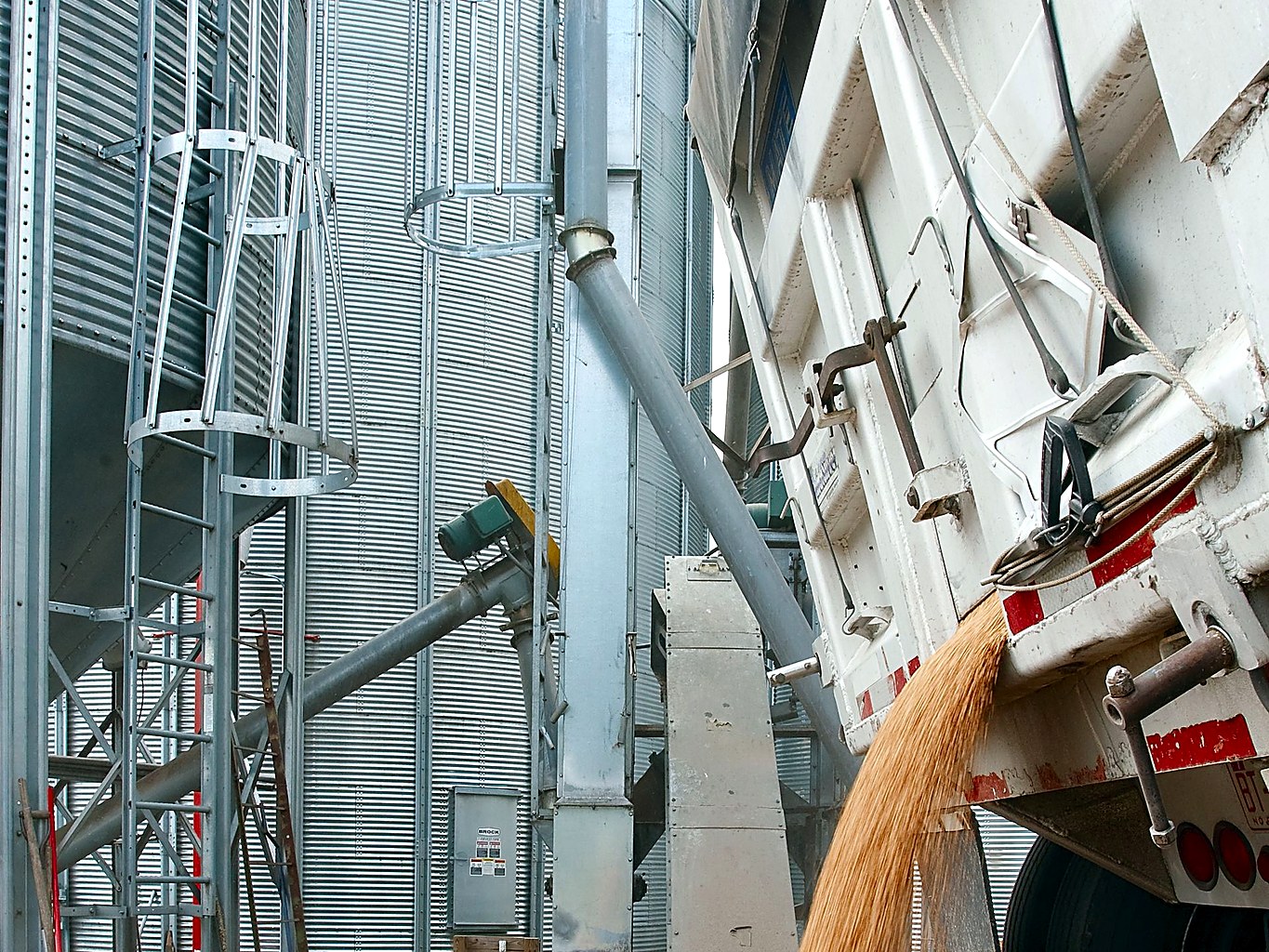
1. Efficient receiving: a receiving pit paired with a bucket elevator is the standard high-throughput intake — trucks tip into the pit and the elevator lifts grain to the filling conveyor without a second handling step.
2. Cleaning before storage: screen cleaners remove weed seeds, straw, dust and broken kernels ahead of the silo. This is not cosmetic: fines and broken grain concentrate where airflow is weakest, hold moisture, and feed the insects and molds that a storage program exists to prevent.
3. Coring after filling: even cleaned grain leaves a column of fines and light material directly under the filling spout — the spoutline core. Unloading a portion of the grain shortly after filling removes this core and eliminates the single most common starting point for storage spoilage.
Aeration and Temperature Management
Aeration is the workhorse of wheat storage, and its first rule is to know the difference between cooling and drying. Cooling aeration moves modest volumes of air (roughly 0.05–0.5 cfm/bu) to push a cooling front through the grain and hold it at safe temperatures; natural-air drying demands several times more airflow (wheat typically needs at least 0.75 cfm/bu, started when the grain is at or below about 17% moisture and air temperatures are cool enough to dry rather than re-wet). Specifying a fan for one job and running it for the other is a classic planning failure.
The cooling timetable is predictable: at 0.1 cfm/bu a cooling front takes on the order of 120 hours to move through the store, which is why aeration programs are planned in multi-day campaigns around weather windows rather than switched on for an afternoon. Once the grain is cool, temperature cables laid through the store watch for hot spots — and a small CO₂ sensor adds an early-warning layer that beats temperature by several days, because rising CO₂ (above roughly 600 ppm and climbing) signals insect or mold activity before any measurable hot spot forms.
Fumigation-Ready Sealing
Fumigation only works in a sealed silo — phosphine gas that leaks out is gas that never reached the insects, and under-dosing breeds resistance. Sealing therefore has to be a specification with a number attached, not a sales adjective.
1. The airtightness test: the standard acceptance method is a pressure decay test — pressurize the sealed silo and time how long the pressure takes to fall by half. Commonly applied criteria require the half-life pressure decay (from 25 down to 12.5 mmHg) to take more than 3 minutes, with newly built sealed silos targeting more than 5 minutes. A silo that cannot pass the test cannot hold a fumigant concentration.
2. The phosphine regime: effective treatment holds at least 300 ppm for 7 days when grain is above 25°C, or at least 200 ppm for 10 days at 15–25°C — and the same grain lot should not be fumigated more than three times, which is precisely why the first treatment must succeed.
3. Circulation for uniformity: in larger stores, passive gas diffusion leaves concentration gradients — deadly at the top, survivable at the bottom. Recirculation systems that actively move gas through the grain mass keep concentrations uniform, and in a genuinely airtight, well-aerated silo, degassing after treatment shrinks from about 5 days to about 1.
What a Turnkey Wheat Storage Project Includes
Brought together, a complete wheat storage project integrates receiving and cleaning, filling and distribution, aeration and temperature monitoring, recirculation fumigation and, where the climate demands it, low-temperature storage — the “four-in-one” grain storage technology that combines condition monitoring, mechanical ventilation, circulation fumigation and low-temperature storage into one operating program. Designing these as one system from the start is what turns a set of equipment into a storage facility.
Under an EPC contract, one party carries the project from site assessment through design, manufacture, installation, commissioning and handover — a single interface for performance, schedule and after-sales support. Our team delivers wheat silo projects on this turnkey basis, including one year of free maintenance after commissioning. To see how these systems come together on the storage side, visit our service page or contact us with your annual tonnage and site conditions for a layout proposal.
Frequently Asked Questions
How big is a 10,000-ton wheat silo?
On wheat’s bulk density of roughly 0.75 t/m³, 10,000 tons occupies about 13,300 cubic meters before allowances for the filling cone, roof clearance and residual grain — so the geometric volume is noticeably larger. Final diameter and height follow from the site footprint, foundation conditions and the discharge concept.
Should a wheat silo be flat-bottom or hopper-bottom?
Both are proven. Hopper-bottom silos empty completely by gravity and suit seed grain, wet-corn buffer duty and high-turnover storage. Flat-bottom silos cost less per stored ton at large sizes and suit long-term depot storage, with sweep-auger equipment for final cleanout. The decision usually follows turnover frequency and how completely the store must be emptied.
What airtightness does fumigation require?
A pressure decay half-life (25 to 12.5 mmHg) of more than 3 minutes is the commonly applied acceptance threshold, and newly built sealed silos should target more than 5 minutes. The test is done after filling, with the grain weight seating the outlet seals — the most common leak path.
How often should stored wheat be inspected?
Weekly while the grain is warm — roughly above 13–15°C — and every two weeks once it has cooled. Inspections combine temperature cable readings, CO₂ or smell checks, and physical probing at fixed points. The habit matters more than the instrument: most storage losses announce themselves weeks before they become losses.